In recent years, there has been a growing interest in natural oils and fats due to their remarkable health, cosmetic, and industrial benefits. One such emerging product is ostrich oil, derived from the fat of these large, flightless birds.
With the rising global demand for ostrich meat, oil, and leather, ostrich farming has become an increasingly popular and profitable venture in Pakistan. In this article, we’ll explore the fascinating process of raising ostriches, extracting ostrich oil, and the many benefits and uses of this extraordinary natural product — brought to you by Islamabad Ostrich Farms, one of Pakistan’s trusted names in ethical ostrich farming.
🪶 Fundamentals of Ostrich Farming
1. Choosing the Right Breed
Selecting the appropriate ostrich breed is crucial when establishing a farm. The African Black-necked ostrich and Blue-necked ostrich are two of the most common breeds used for commercial farming. Each has distinct characteristics and climate adaptability. Consulting with industry experts can help determine which breed best suits your region and farming goals.
2. Enclosure & Housing
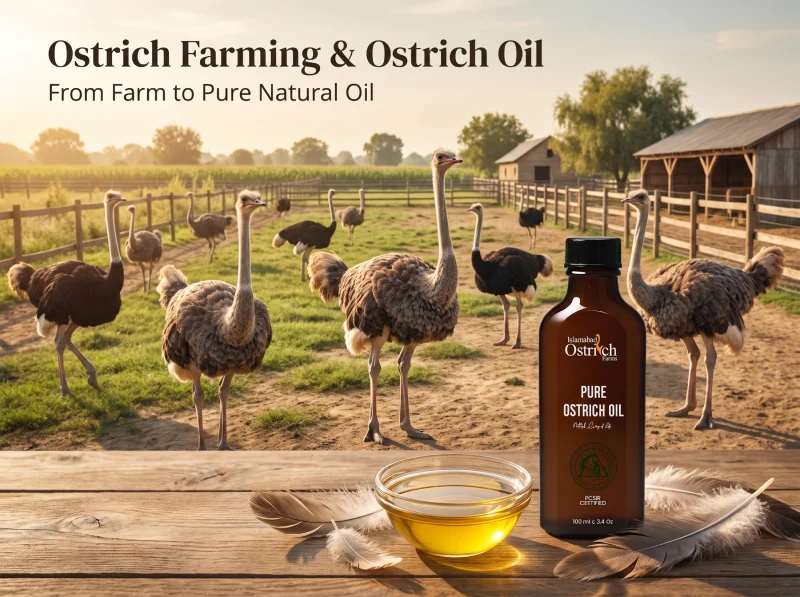
Ostriches are resilient birds but require proper shelter and secure enclosures to stay safe from predators and harsh weather. At Islamabad Ostrich Farms, our enclosures are designed to mimic their natural habitat — featuring spacious grassy fields and sandy areas that allow them to roam freely and stay stress-free.
3. Diet & Nutrition
Ostriches are omnivorous, and their diet plays a vital role in their growth and overall health. A balanced ostrich diet includes grains, seeds, fruits, vegetables, and protein sources such as insects. Access to clean, fresh water is also essential, especially in hot climates. Proper nutrition directly impacts the quality of ostrich oil and meat.
4. Reproduction & Breeding
Ostriches are known for their high reproduction rate. A single female can lay up to 60 eggs per year, each weighing around 3 pounds. With a 42-day incubation period, proper monitoring and care are essential to ensure healthy chicks and sustainable breeding.
5. Health & Care
Although ostriches are generally hardy, regular health checks, vaccinations, and deworming are necessary to maintain their well-being. Islamabad Ostrich Farms prioritizes humane care and veterinary supervision to ensure the highest standards of animal welfare.
🧴 Ostrich Oil: Extraction & Utilization
Once the birds are fully mature, the process of extracting ostrich oil from their fat begins — a method that combines traditional care with modern technology.
1. Fat Collection
Ostriches store most of their fat in a single pad located in the abdominal cavity. During processing, this fat is carefully separated and prepared for rendering.
2. Fat Rendering
Rendering is the process of melting fat to separate pure oil from tissues and impurities. There are two primary methods:
Dry Rendering: Fat is heated without water — ideal for smaller batches, requiring precise temperature control.
Wet Rendering: Water is added during the heating process, commonly used for large-scale extraction. This method reduces the risk of burning and ensures better oil quality.
3. Clarification & Filtration
After melting, the fat is filtered to remove any remaining particles or moisture. This crucial step ensures the purity, clarity, and long shelf life of ostrich oil.
4. Packaging & Storage
Once purified, the oil is cooled, solidified, and packed in airtight containers to preserve freshness and prevent oxidation.
🌿 Uses & Benefits of Ostrich Oil
Ostrich oil is a multi-purpose natural product with extensive applications across the cosmetic, wellness, and industrial sectors.
1. Cosmetic & Skincare Applications
Rich in omega fatty acids (especially oleic acid), ostrich oil deeply nourishes and hydrates the skin. It’s widely used in lotions, serums, soaps, and creams for its ability to:
Restore moisture balance
Reduce inflammation
Soothe irritated or dry skin
Promote smoothness and elasticity
Its anti-inflammatory and antioxidant properties make it ideal for sensitive and acne-prone skin.
2. Health & Dietary Supplements
Ostrich oil is available in supplement form, believed to support joint health, reduce inflammation, and boost overall wellness. However, it’s important to consult a healthcare professional before using any dietary supplement.
3. Leather & Leather Care Products
Ostrich leather is prized worldwide for its unique texture, softness, and durability — used in premium products like wallets, belts, and handbags. Ostrich oil is also used to condition and polish leather, enhancing its natural sheen and longevity.
4. Traditional & Medicinal Uses
Historically, ostrich oil has been used as a natural remedy for joint pain, burns, wounds, and skin infections. It also serves as an excellent massage oil for relaxation and improved circulation. While scientific studies are ongoing, these traditional uses highlight the oil’s therapeutic potential.
🌎 Sustainability & Ethical Farming
At Islamabad Ostrich Farms, sustainability is at the heart of everything we do. We follow ethical and environmentally responsible farming practices, ensuring:
Animal Welfare: Providing proper nutrition, housing, and veterinary care.
Environmental Care: Managing waste responsibly and conserving natural resources.
Halal & Legal Compliance: Adhering to all Pakistani and international standards for humane and halal processing.
✅ Conclusion
Ostrich farming represents a unique blend of agriculture, science, and sustainability. From lean, healthy meat to premium leather and nutrient-rich oil, ostriches provide valuable resources that are both ethical and eco-friendly.
At Islamabad Ostrich Farms, we’re proud to be part of Pakistan’s journey toward a more natural and sustainable future. Our Halal-certified ostrich oil is carefully extracted and crafted to deliver pure, natural benefits — whether you’re looking for skincare solutions or wellness support.